
If 4,000 workers could work round the clock for the construction of the new Parliament building, then there is no reason why all infrastructure projects too cannot follow that model, asserts Dr Sudhir Bisht.

Paytm CEO Vijay Shekhar Sharma said on Wednesday that the company's share market performance has been in line with that of global peers in the sector over the past six months due to macroeconomic factors. "Macro factors like quantitative easing, free money due to US monetary policy and other parameters led to a spook in the market in terms of pricing the IPO. "Paytm's shares have received a similar response to that of global peers in the last six months...But that is not a complete reasoning.

AI and machine learning will only continue to grow in 2022, with a significant increase in the demand for such roles, notes Sekhar Garisa, CEO, Monster.com.

FPIs have turned net sellers in 2022 after being net buyers in the last three years.

India must remain an integral part of the global economy if it has to grow at 9-10 per cent over the next three decades, Niti Aayog CEO Amitabh Kant said on Tuesday. Speaking at the 15th India Digital Summit, Kant said India needs to become a major global exporting nation, without that it will not be possible to become richer and create wealth for its people over the next three decades.

Prime Minister Modi also made a veiled reference to China, saying the global order is based on the respect for the principles of the UN Charter, peaceful resolution of disputes, and respect for sovereignty and territorial integrity.

The federal agency said it conducted raids against a director of Zanmai Lab Pvt Ltd, which owns WazirX, on August 3 in Hyderabad and alleged he was "non-cooperative". The agency's probe against the crypto exchange is linked to its ongoing investigation against a number of Chinese loan apps (mobile applications) working in India.

Half the stocks in the Nifty 100 index have seen a reduction in their target price by analysts this year due to fears of lacklustre earnings growth and uncertain economic environment. Adani Green Energy, FSN E-Commerce (Nykaa), Adani Ports & SEZ and Indus Towers are among the companies that have seen the maximum cut in TPs during the first three months of calendar 2023, shows Bloomberg data. On the other hand, Canara Bank, JSW Steel and Bank of Baroda have seen the highest increase in TPs.

After a month long gap, the primary market is heading for a busy time, with five firms including Paytm parent One97 Communications and policybazaar parent PB Fintech have lined up their IPOs in the first half of November to raise over Rs 27,000 crore collectively. The other three firms whose initial share-sales are set to open are Sapphire Foods India, which operates KFC and Pizza Hut outlets, decorative aesthetics supplier SJS Enterprises and microcrystalline cellulose manufacturer Sigachi Industries. The IPOs of FSN E-Commerce Ventures Ltd, which runs online marketplace for beauty and wellness products Nykaa, and Fino Payments Bank are currently open for public subscription.

The Reserve Bank of India (RBI) on Wednesday proposed to make interoperability mandatory for digital payments firms. It also allowed users to withdraw cash from e-wallets and fintech companies to process RTGS and NEFT transactions. The RBI expressed dissatisfaction over prepaid payment instruments' (PPIs') failure to migrate towards full-KYC (know your customer) PPIs, and therefore interoperability, even two years after guidelines were issued.
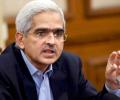
The increasing involvement of Big Tech in the financial system could give rise to concentration risk and there are potential spillovers, which call for closer attention, Reserve Bank of India (RBI) Governor Shaktikanta Das said on Tuesday. "...enormous amounts of consumer data is being generated and leveraged upon by a few entities (the so-called Big Tech) by virtue of their huge customer base. "Such developments raise concerns on concentration risk and potential spillovers as their level of engagement with the financial system strengthens in the years to come," Das said at the Global Fintech Fest 2022.

Despite strong AUM growth, MFs lag behind other popular investment avenues. MFs received only 6 per cent of total household savings in 2021-2022.

If you are a budding developer and interested in Web3, chances are that you will be headed to one of India's largest-ever meetings of Web3 developers, being held by Polygon, a Web3 platform. The company's ongoing "Web3: Made in India Tour" is expected to see close to 4,000 developers coming together at the inaugural Polygon Connect event in Bengaluru on December 1. The event highlights the growing dominance of Web3 developers from India, as well as the sector's rising interest to investors, who continue to invest in startups despite a funds crunch.

The Navi lending app, launched in May, provides instant loans of up to Rs 5 lakh, with repayment tenures of up to 36 months.

Both prime ministers believed in crafting schemes to help the common man. Modi used quite effectively the instruments Dr Singh introduced. In assessing Modi's success with many schemes, Dr Singh's fundamental work should not be ignored, points out A K Bhattacharya.

Indian startups received about $6.5 billion in funding in the April-June 2021 quarter, while 11 of them entered the coveted unicorn club, a report by Nasscom-PGA Labs said. During the second quarter, 160 funding deals were closed -- up 2 per cent from the January-March period. "Q2 2021 has been impeccable for the start-up growth story. From being the most funded quarter, it has also added the most number of unicorns. "Standing tall during the pandemic second wave headwinds, Indian start-up ecosystem has shown a strong resilience in this quarter," the report said.

'It doesn't matter where you come from. If you strongly believe in your idea and we see potential in scaling it up, there are people to back it up.'

Prime Minister Narendra Modi on Thursday said his government is using all channels including diplomatic to bring back high-profile economic offenders, leaving them with no option but to return to the country. Speaking at a symposium on credit flow and economic growth, he asked banks to support wealth and job creators with proactive lending while promising to stand by any loans given in right earnest. "In our attempt to bring back fugitive (economic offenders), we relied on policies and law and also used diplomatic channels.

'We want to achieve overall profitability, and then we would go for an IPO.'

The future of cryptocurrencies in India appears uncertain but that has not deterred young Indians from embracing the so-called 'fourth industrial revolution' world, where interconnectivity and smart automation, much of it relying on blockchain technology, drive human civilisation. Reserve Bank of India (RBI) Governor Shaktikanta Das has repeatedly warned of macroeconomic instability and even "serious consequences" if cryptocurrencies turn mainstream. The country's monetary authority wants a China-like total ban on crypto, not even allowing these currencies to be treated as investments. Though Parliament's website had listed the Cryptocurrency and Regulation of Official Digital Currency Bill as one seeking a total ban of cryptocurrencies in the country, it was not presented in the Winter Session. India now has the highest number of cryptocurrency investors in the world.

Maharashtra Chief Minister Eknath Shinde on Wednesday said Memorandums of Understanding worth Rs 1.37 lakh crore have been signed at the World Economic Forum (WEF) annual meeting in Davos in Switzerland and termed it as a "big achievement". This will generate employment for one lakh people, said Shinde, who was in Davos to seek investments in Maharashtra. "The MoUs will not remain just on paper," he said, adding that foreign investors have shown trust and faith in the state government.

With the 21 unicorns collectively valued at $73.2 billion, India is the fourth biggest in terms of unicorns, behind the US, China and the UK, as per the Hurun Global Unicorn List.

At least 14 of the top 20 venture capital (VC) and private equity (PE) funds in India reduced new deals with start-ups by a fifth in 2022. The number fell from 572 in 2021 to 456 this year, according to data from Venture Intelligence. Sequoia Capital, a leader in investments, retained its top slot but its number of deals fell from 110 in 2021 to 70 this year.

'There is pent-up demand for cricket after last year when no tournaments were played on Indian soil due to the pandemic.'

India's e-commerce market is poised to grow by 84 per cent to $111 billion by 2024 on the back of accelerated adoption of digital technologies amid the COVID-19 pandemic, a report by fintech firm FIS said on Wednesday. The report noted that countries, including India, have seen a shift in consumer behaviour caused by COVID-19, and new payment trends are shown to be on the rise. FIS, in its 2021 Global Payments Report, examined current and future payment trends across 41 countries. India's e-commerce market is projected to grow by 84 per cent between now and 2024 to about $111 billion (from about $60 billion in 2020) driven by mobile shopping, which is projected to grow 21 per cent annually over the next four years, the report said.

Reminiscent of the past two years, the market has made positive strides ahead of the Union Budget 2023-24 (FY24). The benchmark National Stock Exchange Nifty has gained 1.8 per cent in the last month. Typically, markets tend to gain ahead of the Budget as investors build in optimism.

'If we want faster growth and want greater flow of credit towards the private sector, it's important to have many more of such large entities.'

Gold prices hit record high in the third week of March as fears of bank collapses and high inflation led investors to the traditional safe haven. Gold prices are often inversely correlated to dollar strength because the international price is dollar-denominated. The Federal Reserve's (Fed's) stance indicates that the dollar may appreciate further since it is prepared to keep pushing up policy rates. But demand for gold is also up - the World Gold Council claims central banks are buying in addition to private demand.

'At the first board meeting I chaired, I sensed that corporate governance is an issue in this company.' 'I started taking steps that may have aggrieved a few.' 'This has now become a mission I intend to accomplish before I step down.'

Modi hailed the close defence cooperation between the two countries and welcomed the completion of the logistics agreement between the two navies.

'Google and Facebook need to be tamed, their garb of 'Investing in India's future' need to be pulled off,' observes Vibhu Arya.

Credit card spends touched an all-time high of Rs 1.16 trillion in July, registering a growth of 6.5 per cent on a month-on-month basis and 54 per cent year-on-year, latest data put out by the Reserve Bank of India revealed. Spends have topped the Rs 1 trillion level for five consecutive months now. Industry participants are expecting further tailwinds in credit card spends with the onset of the festive season, where spends typically remain at an elevated level.

The markets may be entering a consolidation phase and are expected to trade sideways for now after a good run in the last few weeks, suggest analysts. In this backdrop, they suggest investors can book profits at the current levels and enter the market again on a decline from a medium-to-long term perspective. Thus far in fiscal 2023-24 (FY24), the S&P BSE Sensex has moved up around 5 per cent to nearly 62,000 levels.

PEs and VCs are taking a closer look at their bouquet of investments. Leading voices in the sector are categorical that cash-burn rates -- that's blowing up equity to acquire market share -- as a business model can't continue to be the polestar.

India needs a paradigm shift in personal data management that transforms the current organisation-centric data sharing system to an individual centric approach that promotes user control on data sharing for empowerment, said Niti.

That's because India does not have a serious venture capital industry with an appetite for risk, observes T N Ninan.

Employees across segments, including those involved in specialised jobs such as technology, compliance and risk management, have started leaving the bank fold in hordes, observes Tamal Bandyopadhyay.

India is in dire need of cybersecurity professionals. With several recent incidents of data breach, India's cybersecurity journey so far proves this demand. But is the country ready to meet this demand and is it preparing a cybersecurity workforce for the unforeseen cyber future? A report titled "India Cybersecurity Services Landscape" by Nasscom-Data Security Council of India (DSCI) predicts that the Indian cybersecurity services industry would grow at a compound annual growth rate (CAGR) of about 21 per cent to touch $13.6 billion by 2025. And by 2022, the industry, which generated a cumulative revenue of about $4.3 billion in 2019, is expected to grow to $7.6 billion. However, around 3.5 million jobs in the cybersecurity space will remain unfilled by the end of 2021.

For a segment that thrives on promise more than performance, the country's start-up ecosystem is refusing to get carried away by the funding this calendar year. This has created the highest level of uninvested venture capital in seven years as investors wait for corrections in the working and - more importantly - valuation of start-ups while looking for cockroaches instead of unicorns. "Investors are now keen to invest in companies that have good top and bottom lines.

Despite gold prices hitting record highs, analysts aren't gung-ho about the outlook for gold financiers Muthoot Finance and Manappuram Finance. This, they said, was due to intense competition from banks, coupled with stagnating loan books and likely pressure on margins.
